Overview
In industrial processes and manufacturing lines, the efficient and safe operation of devices and equipment is critical for success. However, faults and anomalies can occur, leading to equipment failures, downtime, and safety hazards. Fault detection using computer vision and AI offers a promising approach for detecting faults and anomalies in devices and equipment. In this blog post, we will explore some key features and benefits of fault detection using computer vision and AI.
Key Features of Fault Detection Using Computer Vision and AI
- Multi-Modal Data Integration: Fault detection using computer vision and AI can
integrate multiple types of data such as images, videos, and sensor data. This approach can improve the
accuracy of fault detection by combining different types of data that capture different aspects of
equipment behavior.
- Autonomous Learning: Once the machine learning model is trained, the system can learn
and adapt to new types of faults and anomalies autonomously. This feature reduces the need for manual
intervention and increases the efficiency of fault detection.
- Scalability: The system can be scaled to handle a large volume of data and multiple
devices and equipment. This feature allows for efficient monitoring of devices and equipment across
different locations.
- Customization: The system can be customized to the specific needs of different
industries and applications. This feature allows for tailored fault detection algorithms and models that
can be optimized for the specific devices and equipment being monitored.
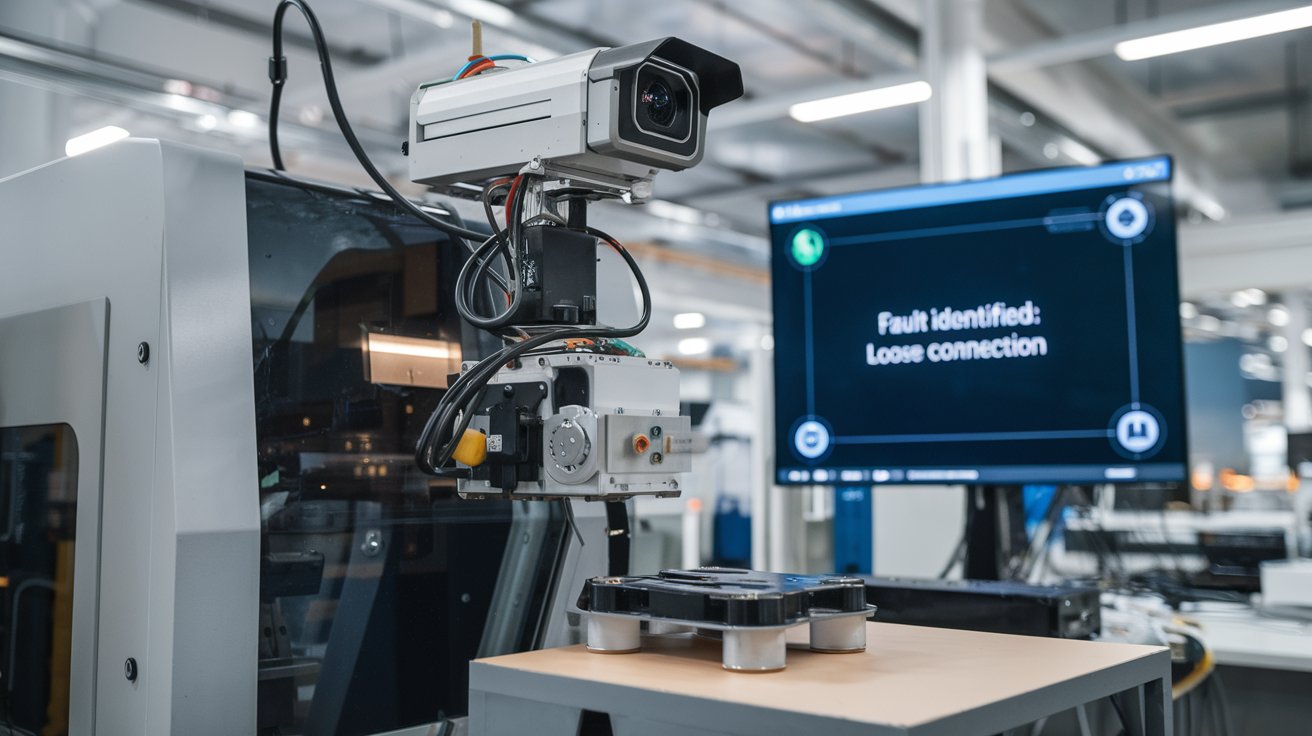
Benefits of Fault Detection Using Computer Vision and AI
- Improved Equipment Maintenance: Fault detection using computer vision and AI can
identify faults early, which allows for preventative maintenance to be performed, reducing the risk of
equipment failure and downtime.
- Increased Safety: Fault detection using computer vision and AI can identify safety
hazards before they cause harm to personnel or damage to equipment.
- Increased Efficiency: Fault detection using computer vision and AI can improve the
efficiency of equipment and processes by minimizing downtime and reducing the need for manual
intervention.
- Cost Savings: Fault detection using computer vision and AI can reduce the costs
associated with equipment failure, downtime, and manual inspection.
Fault detection in devices and equipment using computer vision and AI offers several key features and
benefits that can improve the efficiency, safety, and reliability of industrial processes. By integrating
multiple types of data, the system can provide accurate and timely detection of faults and anomalies,
allowing for preventative maintenance and reducing the risk of equipment failure and downtime.
Applications of Fault Detection Using Computer Vision and AI
- Manufacturing: Fault detection using computer vision and AI can be used to monitor
the performance of manufacturing equipment such as robots, conveyor belts, and assembly lines. This can
improve production efficiency and reduce downtime.
- Energy: Fault detection using computer vision and AI can be used to monitor energy
production equipment such as wind turbines, solar panels, and power grids. This can improve energy
efficiency and reduce downtime.
- Transportation: Fault detection using computer vision and AI can be used to monitor
the performance of transportation equipment such as trains, planes, and automobiles. This can improve
safety and reduce downtime.
- Healthcare: Fault detection using computer vision and AI can be used to monitor
medical equipment such as MRI machines, X-ray machines, and patient monitoring systems. This can improve
patient safety and reduce downtime.